





Chapter 7
Liquidation
May pause covered garnishments and discharge qualifying unsecured debts. Discharging the underlying debt can prevent future collection of that debt.
Learn About Chapter 7
Bankruptcy & Wage Garnishment
Wage garnishment can take part of your paycheck. Bankruptcy may pause it through the automatic stay and help you explore a path forward.
Wage garnishment is a legal process that requires your employer to withhold part of your earnings to repay a debt. It often follows a court order, although some government debts and support obligations use other procedures. Limits and protections depend on the debt and applicable law.
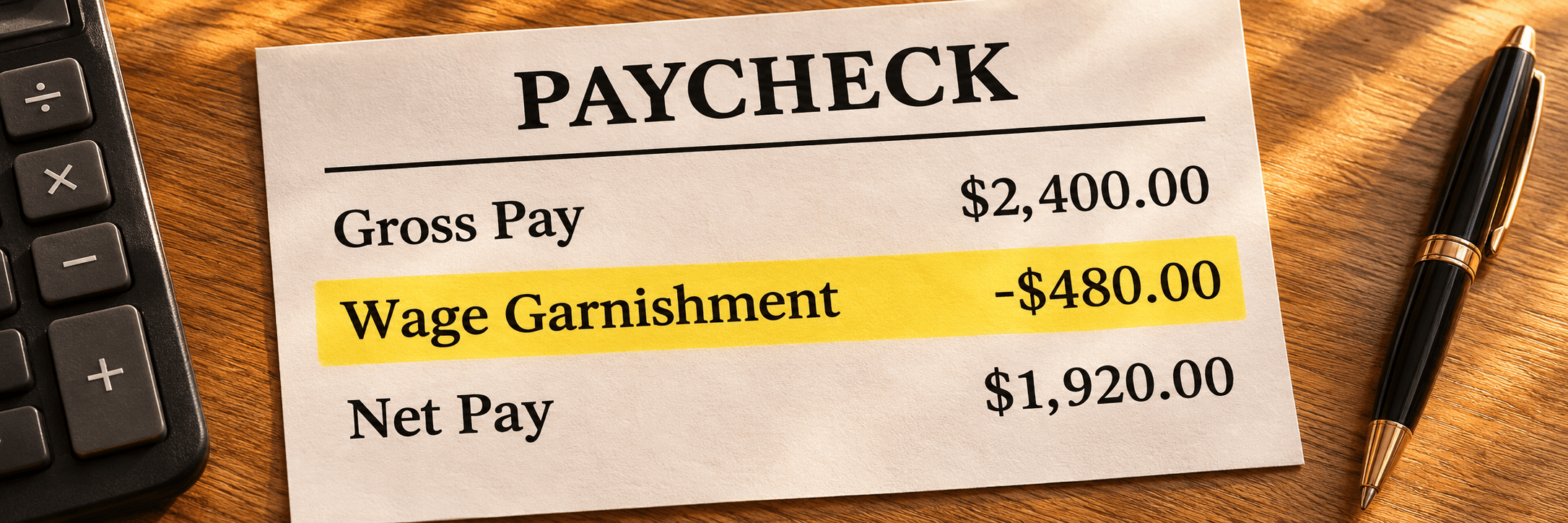
For many consumer debts, garnishment follows these steps. Some debts can be collected without a court judgment, and procedures vary by state.
A creditor may take legal action to collect a debt.
A court may enter a judgment in the creditor’s favor.
An order requiring withholding is sent to your employer.
Your employer withholds part of your pay as directed.
Filing a bankruptcy petition generally starts an automatic stay that pauses most wage garnishments. Support withholding and other exceptions may continue; repeat filings can limit the stay.
Liquidation
May pause covered garnishments and discharge qualifying unsecured debts. Discharging the underlying debt can prevent future collection of that debt.
Learn About Chapter 7
Repayment Plan
May pause covered garnishments while you address debts through a court-approved repayment plan, usually over three to five years.
Learn About Chapter 13
Depending on the debt, your eligibility, and the outcome of your case, bankruptcy may help you:
The automatic stay generally begins when a bankruptcy petition is filed. It pauses covered garnishments while it remains in effect, but exceptions and repeat-filing limits apply. Your creditor and employer need notice. If withholding continues, give your attorney your notice and recent pay stubs; do not assume withheld funds will automatically be returned.
Federal bankruptcy law generally prohibits government and private employers from firing you or discriminating against you in employment solely because you filed for bankruptcy, were insolvent before or during the case before discharge, or did not pay a dischargeable or discharged debt. This does not prevent actions for unrelated lawful reasons. Speak with an attorney if you believe your rights were violated.
Both chapters may pause covered garnishments. Chapter 7 can discharge qualifying debts if you are eligible; Chapter 13 addresses debts through a repayment plan. The better fit depends on your income, property, debt types, filing history, and goals. Some support-related withholding can continue under either chapter.
Creditors generally cannot collect a debt that has been discharged. However, collection may resume for a debt that survives bankruptcy or if your case is dismissed or the stay ends without a discharge. Child support, alimony, and other exceptions require separate review. An attorney can explain what your court orders mean for each debt.
Bring your garnishment notice and recent pay stubs to a bankruptcy attorney. Submitting a request to StartOverNow.us does not file a bankruptcy case or stop a garnishment.

Request a connection with a participating bankruptcy law firm to discuss your options and find a clear next step.
Our team will review your request. A law firm connection is not guaranteed.